 01TRIAGE
Content Analysis
Hash-first categorisation before a single pixel is rendered.
Known material is matched against agency hash sets and quarantined. Only unknown media reaches a model, and it is described in text before it is ever displayed.
ACPIA is an air-gapped agentic system for authorised child-protection units. It correlates images, chat, audio, metadata and carrier records into a prioritised lead queue — and it gets there without forcing an analyst to look at abuse material first.

Four pressures compound in every child-protection case. ACPIA is designed against all four at once, rather than optimising one and ignoring the rest.
A single seizure can yield terabytes across phones, laptops, drives and cloud exports. Manual review does not scale to it.
Chat databases, EXIF, call detail records, browser artifacts, voice notes, screenshots — each in its own dialect, none joined up.
Safeguarding value decays fast. A lead found in week six is a different outcome from the same lead found on day one.
Analysts absorb exposure that has documented psychological consequences. Any credible tool has to reduce it, not multiply it.

The bottleneck was never storage.
It is the distance between a byte on a disk and a decision an investigator can defend in court. ACPIA is built to close exactly that distance.
ACPIA is not one model answering questions. It is a supervised agent topology where every finding is re-checked against its source before an investigator sees it.
Evidence
Read-only mounts, SHA-256 addressing
Planner
Goal decomposed into a task graph
Specialists
Nine agents work in parallel
Critic
Unsupported leads are killed here
Investigator
Ranked queue with full provenance
Every arrow in this diagram writes a signed entry to the audit ledger.
Decomposes the investigation goal into a task graph
Mounts evidence read-only, hashes and indexes every artifact
Describes unknown media in text before anything is rendered
Transcribes, diarises and detects language and background cues
Reads chat, mail and documents for intent and coercion signals
Extracts and enriches EXIF, filesystem and carrier records
Resolves entities and links sources across platforms
Normalises clocks and merges events into one sequence
Re-checks every lead against source artifacts, kills the unsupported
Each module is a named service with its own inputs, outputs and confidence model — so a finding can always be traced back to the component that produced it.
01TRIAGEContent Analysis
Hash-first categorisation before a single pixel is rendered.
Known material is matched against agency hash sets and quarantined. Only unknown media reaches a model, and it is described in text before it is ever displayed.
 02SENTINEL
Threat Identification
Scores coercion and grooming patterns in conversation.
Linguistic escalation, isolation attempts and secrecy pressure are scored across chat, DM and SMS. It flags risk to a child — it never issues a verdict on legality.
 03FUSION
Source Correlation
Resolves one actor across many identities.
Handles, devices, IMEIs, numbers, wallets and IPs are reconciled into single entities with a confidence score and a full list of the evidence behind the merge.
 04CONTEXT
Contextual Extraction
Scene, object and audio cues from multimedia.
Room type, visible signage, uniforms, landmarks, on-frame OCR and speech transcripts combine into venue and geography hypotheses for safeguarding teams.
 05PATTERN
Activity Pattern Analysis
Digital footprint rhythm and escalation curves.
Diurnal activity, platform-hopping, contact-frequency anomalies and escalation slope reveal behavioural signatures across a target's online life.
 06TRACE
Metadata Mapping
EXIF, filesystem and carrier metadata into a graph.
Every artifact contributes nodes and edges: device serials, GPS fixes, capture times, file lineage — enriched and mapped as a navigable relationship network.
07VERITASSynthetic Detection
Flags manipulated, synthetic or AI-generated media.
Diffusion and GAN artefact scoring, C2PA provenance inspection and sensor-noise consistency checks separate captured reality from generated content.
 08CHRONO
Timeline Reconstruction
One timeline from many clocks.
Events from devices, servers and carriers are merged with timezone and clock-skew normalisation, so a sequence holds up when it is challenged.
 09RECALL
Intelligent Retrieval
Ask the case a question in plain language.
Hybrid keyword and local-embedding search across every extracted text surface. Answers arrive with citations that jump straight to the source artifact.
 10SCRIBE
Automated Reporting
Draft case reports where every line is cited.
Generates the case narrative, exhibit list and electronic-record certificate skeleton. Any sentence without a source artifact is refused, not guessed.
 11PRIORITY
Risk Assessment
Ranks leads by child-at-risk-now signals.
Recency, geographic proximity, contact-in-progress and escalation velocity decide the queue order — so the most urgent safeguarding lead is never buried at page nine.
12NEXUSIntelligence Fusion
Finds the network no single artifact reveals.
Community detection and path analysis over the fused knowledge graph expose distribution rings and shared infrastructure across otherwise unlinked cases.
An investigator should never have to trust a score. Selecting any lead opens the exact artifacts behind it, the transform applied, and the confidence — ready for cross-examination.
Why this lead
Recommended next step
Route to safeguarding desk for immediate welfare check
ACPIA proposes priority, never a determination. An authorised officer confirms or rejects — and that decision is logged.
Illustrative interface using synthetic case data. No real case material, victim data, or seized evidence appears anywhere on this site.
A tool that cannot be trusted in a courtroom, or that harms the analysts using it, has no operational value however accurate its models are.
Known material is matched by hash and quarantined without display. Unknown media surfaces first as text, then blurred, and only at full fidelity under a logged two-person unlock.
Open-weight models run on-premise on a single GPU workstation. No evidence byte ever leaves the agency network, and no third-party API is in the path.
Every agent action records its input hash, model version, output and operator into an append-only chain. Tampering breaks the chain and is provable.
Each lead carries a ‘why this lead’ panel listing the exact artifacts behind it. Nothing is asserted to an investigator without a citation.
ACPIA outputs priority and provenance — never a legal determination. No autonomous action is taken against any person under any circumstance.
Exposure time is tracked per session, audio defaults to off, and greyscale review is the default surface. Secondary trauma is treated as an operational risk.
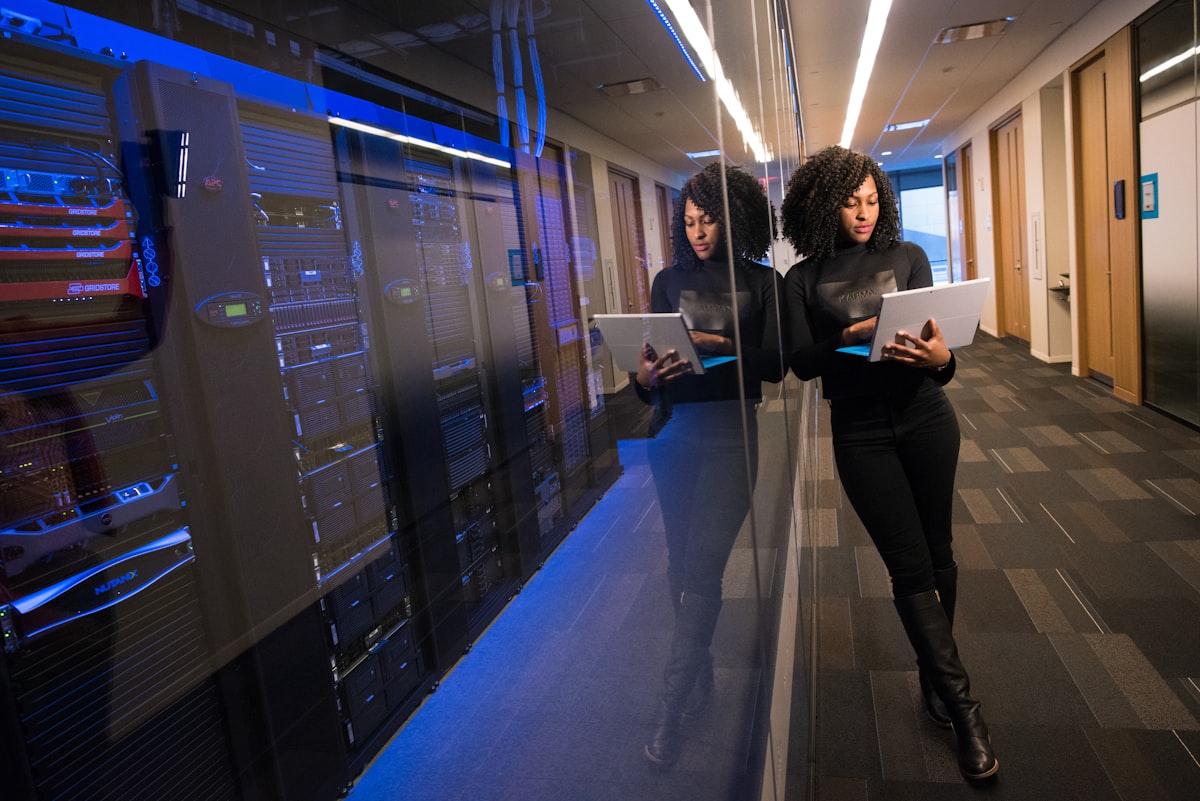
One box. Inside your network.
Open-weight models on a single GPU workstation, installed from offline media. Nothing to send anywhere, nothing to leak.
Hard lines
Designed against the obligations agencies already operate under — POCSO 2012, IT Act s.67B, the electronic-record requirements of the BSA 2023, and DPDP 2023 data-minimisation. Section references should be re-verified against the current statute before any operational deployment.
Every component was chosen so the whole system can be installed offline, inspected by the agency, and defended line by line.
Working spine: ingest, hash triage, metadata graph, timeline, cited retrieval, report generation.
Audio intelligence, synthetic-media scoring, and validation against an agency-held benchmark set.
Deployment with an authorised unit under an MoU, with independent review of the audit ledger design.
Cross-case NEXUS fusion, multilingual coverage for Indian languages, and referral-format export.
ACPIA is built for authorised child-protection units, in partnership with the people who will have to defend its output. We are looking for pilot partners and domain reviewers.